|
|
Personal tools
Title:
|
Associate Professor
|
|
Office Address:
|
2425 Stockton Blvd, Room 631A
Sacramento, CA 95817
|
Office Phone:
|
(916) 453-2287
|
|
E-Mail Address:
|
wbdeng (at) ucdavis.edu
|
|
Education:
|
Postdoctoral Fellowship, Harvard Medical School
Ph.D., Rutgers University
|
|
Research Papers:
|
Click Here for Research Paper Links
|
Research Interests:
Nervous system development and disease; Receptor biology and signal transduction; Basic and translational research in neural injury and repair.
Current Research:
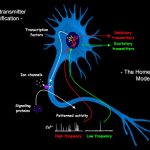
Our lab is interested in studying molecular mechanisms controlling nervous system development and disease. A central theme of our research program has been on pursuing links between genes, gene products, and physiological/pathological processes. Specifically, we use combined biochemical/molecular/cellular and integrative approaches applied to both in vitro and in vivo models to study the role of neurotransmitter receptors and their signaling pathways in the regulation of neural cell proliferation, survival, and differentiation in a cell-specific manner. This research has helped to define at the molecular level the plasticity of brain cells and their potential for enhancing repair of damage caused by brain injury and disease.
Glutamate is a major excitatory neurotransmitter in the brain, but can also cause excitotoxic injury to the nervous system under many pathological circumstances. Previous research has been focused largely, if not exclusively, on neuronal excitotoxicity. However, emerging evidence indicates that the precursors of oligodendrocytes, the myelin-forming glial cells in the central nervous system, share with neurons a high vulnerability to glutamate excitotoxicity that may underlie many nervous system disorders. These precursor cells emerge early in development and remain persistent throughout the adult life. We have been determining the role of glutamate receptors expressed on these cells in nervous system development and injury.
This work has important implications in nervous system diseases from cerebral palsy to multiple sclerosis, in which oligodendroglial injury plays an important role. This research has also opened up exciting new directions in uncovering novel mechanisms of glial excitotoxicity in other neurological and psychiatric disorders.
Noteworthy Publications:
TITLE
|
AUTHOR(s)
|
YEAR
|
DOWNLOAD
|
|
PARP-1 Deletion Promotes subventricular zone neural stem cells toward a glial fate. J Neurosci Res, doi: 10.1002/jnr.23040.
|
Plane JM, Grossenbache SK, Deng W.
|
2012
|
HTML
PDF
|
|
Differentiating human stem cells into neurons and glial cells for neural repair. Front Biosci. 2012 Jan 1;17:65-89. PubMed PMID: 22201733.
|
Selvaraj V, Jiang P, Chechneva O, Lo UG, Deng W.
|
2012
|
HTML
PDF
|
|
DNA polymerase-β mediates the neurogenic effect of β-amyloid protein in cultured subventricular zone neurospheres. J Neurosci Res. 2012 Mar;90(3):559-67. doi: 10.1002/jnr.22780. Epub 2011 Nov 4. PubMed PMID: 22057776; PubMed Central PMCID: PMC3259249.
|
Calafiore M, Capani, A, Deng W.
|
2012
|
HTML
PDF
|
|
Developmental regulation of group I metabotropic glutamate receptors in the premature brain and their protective role in a rodent model of periventricular leukomalacia. Neuron Glia Biol. 2011 Dec 14:1-12. [Epub ahead of print] PubMed PMID: 22169210.
|
Jantzie LL, Talos DM, Selip DB, An L, Jackson MC, Folkerth RD, Deng W, Jensen FE.
|
2011
|
HTML
PDF
|
|
Low dose dextromethorphan attenuates moderate experimental autoimmune encephalomyelitis by inhibiting NOX2
and reducing peripheral immune cells infiltration in the spinal cord. Neurobiol Dis, doi:10.1016/j.nbd.2011.06.004.
|
Chechneva O, Mayrhofer F, Daugherty D, Pleasure D, Hong JS, and Deng W.
|
2011
|
HTML
PDF
|
|
Apoptosis inducing factor deficiency causes reduced mitofusion 1 expression and patterned Purkinje cell degeneration. Neurobiology of Disease, 41: 445–457.
|
Chung SH, Calafiore M, Plane JM, Pleasure DE, Deng W.
|
2011
|
HTML
PDF
|
|
Neuroprotective potential of erythropoietin and its derivative carbamylated erythropoietin in periventricular leukomalacia. Experimental Neurology, 230: 227-239
|
Liu W, Shen Y, Plane JM, Pleasure DE, Deng W.
|
2011
|
HTML
PDF
|
|
Olig gene targeting in human pluripotent stem cells for motor neuron and oligodendrocyte differentiation. Nature Protocols, 6(5): 640-655. The first two authors contributed equally to this work.
|
Liu Y, Jiang P, Deng W.
|
2011
|
HTML
PDF
|
|
Label-free detection of surface markers on stem cells by oblique-incidence reflectivity difference microscopy. BioTechniques, 50 (6): 381–388.
|
Lo K, Sun Y, Landry JP, Zhu X, Deng W.
|
2011
|
HTML
PDF
|
|
Axon-glia synapses are highly vulnerable to white matter injury in the developing brain. J Neurosci Res, DOI: 10.1002/jnr.22722.
|
Shen Y, Liu X, Pleasure DE, Deng W.
|
2011
|
PDF
|
|
Zfp488 promotes oligodendrocyte differentiation of neural progenitor cells in adult mice after cuprizone-induced demyelination. Nature Publishing Group: Scientific Reports, 1:1 doi:10.1038/srep2 (2011).
|
Soundarapandian MM, Selvaraj V, Lo U, Golub MS, Feldman DH, Pleasure DE, Deng W.
|
2011
|
HTML
PDF
|
|
Quiescent and active stages of endogenous adult neural stem cells: identification and characterization. Stem Cells, 29(6):907-912.
|
Wang Y, Plane JM, Jiang P, Zhou C, Deng W.
|
2011
|
HTML
PDF
|
|
Electrically guiding migration of human induced pluripotent stem cells. Stem Cell Rev Reports, DOI 10.1007/s12015-011-9247-5. PubMed ID: 21373881. *Co-correspondence authors.
|
Zhang Jiaping, Marco Calafiore, Yuesheng Huang, Qunli Zeng, Xiuzhen Zhang, Ronald A. Li, Deng W*, Min Zhao*.
|
2011
|
HTML
PDF
|
|
Neurobiology of injury to the developing brain. Nature Reviews Neurology, 6 (6): 328-336.
|
Deng W.
|
2010
|
HTML
PDF
|
|
Blood brain barrier breakdown and repair by src after thrombin-induced brain injury. Annals of Neurology, 67(4):526-533.
|
Liu D, Ander BP, Xu H, Shen Y, Kaur P, Deng W, Sharp FR.
|
2010
|
HTML
PDF
|
|
Prospects for minocycline neuroprotection. Arch Neurol, 67 (12), August 9, 2010. doi:10.1001/archneurol.2010.191.
|
Plane JM, Shen Y, Pleasure DE, Deng W.
|
2010
|
HTML
PDF
|
|
Exploiting pluripotency for therapeutic gain. Panminerva Medica, 52 (2): 167-173. PubMed ID: 20517198
|
Deng W.
|
2010
|
HTML
PDF
|
|
AID in reprogramming: quick and efficient. BioEssays, 32 (5): 385-387.
|
Deng W.
|
2010
|
HTML
PDF
|
|
Mouse models of periventricular leukomalacia. J Vis Exp, 2010 May 18;(39). pii: 1951. doi: 10.3791/1951.
|
Shen Y, Plane, JM, Deng W.
|
2010
|
HTML
PDF
|
|
Differentiation of embryonic stem cells into oligodendrocyte precursors. J Vis Exp, 2010 May 19;(39). pii: 1960. doi: 10.3791/1960.
|
Jiang P, Selvaraj V, Deng W.
|
2010
|
HTML
PDF
|
|
Electrophysiological properties of human induced pluripotent stem cells. Am J Physiol Cell Physiol, 298 (3), C486-495.
|
Jiang P, Rushing SN, Kong C, Fu J, Lieu D, Chan, C, Deng W, Li, R.
|
2010
|
HTML
PDF
|
|
Induced pluripotent stem cells: paths to new medicines. EMBO reports, 11 (3), 161-165.
|
Deng W.
|
2010
|
HTML
PDF
|
|
Switching cell fate: the remarkable rise of induced pluripotent stem cells and lineage reprogramming technologies. Trends in Biotechnology, 28 (4): 214-223.
|
Selvaraj V, Plane, JM, Williams AJ, Deng W.
|
2010
|
HTML
PDF
|
|
PARP-1 deficiency increases the severity of disease in a mouse model of multiple sclerosis. (2009) J Biol Chem, July 2009, doi:10.1074/jbc.M109.013474.
|
Vimal Selvaraj, Mangala Soundarapandian, Olga Chechneva, Ambrose J. Williams, Maxim K. Sidorov, Athena Soulika, David E. Pleasure and Deng W.
|
2009
|
HTML
PDF
|
|
PARylation: strengthening the connection between cancer and pluripotency. Cell Stem Cell, 5: 349-350.
|
Deng W.
|
2009
|
HTML
PDF
|
|
Genome integrity: linking pluripotency and tumorgenicity. Trends in Genetics, 25 (10): 425-427. *Co-correspondence authors.
|
Deng W*, Xu Y*.
|
2009
|
HTML
PDF
|
|
Progress in periventricular leukomalacia. Arch Neurol 65, 1291-1295. 2008
|
Deng W, Pleasure J, Pleasure D.
|
2008
|
HTML
PDF
|
|
Alpha-amino-3-hydroxy-5-methyl-4-isoxazole propionate receptor subunit composition and cAMP-response element-binding protein regulate oligodendrocyte excitotoxicity. J Biol Chem. 281(47):36004-11
|
Deng W, Neve RL, Rosenberg PA, Volpe JJ, Jensen FE.
|
2006
|
HTML
PDF
|
|
Oligodendrocyte excitotoxicity determined by local glutamate accumulation and mitochondrial function. J. Neurochem. 98, 213-222.
|
Deng W, Yue Q, Rosenberg PA, Volpe JJ, Jensen FE.
|
2006
|
HTML
PDF
|
|
Role of metabotropic glutamate receptors in oligodendrocyte excitotoxicity and oxidative stress. Proc. Natl. Acad. Sci. USA 101, 7751-7756.
|
Deng W, Wang H, Rosenberg PA, Volpe JJ, Jensen FE.
|
2004
|
HTML
PDF
|
|
Glutamate receptor-mediated oligodendrocyte toxicity in periventricular leukomalacia: a protective role for topiramate. J. Neurosci. 24, 4412-4420.
|
Follett PL, Deng W, Dai W, Talos DM, Massillon L, Rosenberg PA, Volpe JJ, Jensen FE.
|
2004
|
HTML
PDF
|
|
Calcium-permeable AMPA/kainate receptors mediate toxicity and preconditioning by oxygen-glucose deprivation in oligodendrocyte precursors. Proc. Natl. Acad. Sci. USA 100, 6801-6806.
|
Deng W, Rosenberg PA, Volpe JJ, Jensen FE.
|
2003
|
HTML
PDF
|
|
Oligodendroglia in developmental neurotoxicity. Neurotoxicology 24, 161-178 178 (featured with cover illustration).
|
Deng W, Poretz RD.
|
2003
|
HTML
PDF
|
|
Protein kinase C activation is required for the lead-induced inhibition of proliferation and differentiation of cultured oligodendroglial progenitor cells. Brain Res. 929, 87-95.
|
Deng W, Poretz RD.
|
2002
|
HTML
PDF
|
|
Chronic dietary lead exposure affects galactolipid metabolic enzymes in the developing rat brain. Toxicol. Appl. Pharmacol. 172, 98-107.
|
Deng W, Poretz RD.
|
2001
|
HTML
PDF
|
|
Lead exposure delays the differentiation of oligodendroglial progenitors in vitro. Toxicol Appl Pharmacol 174, 235-244.
|
Deng W, McKinnon RD, Poretz RD.
|
2001
|
HTML
PDF
|
|
Lead alters the developmental profile of galactolipid metabolic enzymes in cultured oligodendrocyte lineage cells. Neurotoxicology 22, 429-437.
|
Deng W, Poretz RD.
|
2001
|
HTML
PDF
|
|
The interaction of lead exposure and arylsulfatase A genotype affects sulfatide catabolism in human fibroblasts. Neurotoxicology 21, 379-388.
|
Poretz RD, Yang A, Deng W, Manowitz P.
|
2001
|
HTML
|
IPRM 2425 Stockton Blvd. Sacramento, CA 95817 (916) 453-2290
webmaster (at) iprmd.org
|